Amazon Bedrock, Google Vertex AI and Grok join OpenAI, Anthropic, Gemini and self-hosted model options.
"Every quarter the frontier moves. Here's what we added to MagOneAI and why it matters."
What's New
MagOneAI already supports OpenAI, Anthropic, Gemini and self-hosted models. Now, users can also choose Amazon Bedrock, Google Vertex AI and Grok (xAI), giving teams more options for each workflow.
For a business team, the value shows up in everyday work: fewer hours spent investigating an invoice, a stronger first draft of a proposal, or a clearer view of a supply problem. For a technology leader, it also means more room to choose a model that fits the task, budget and company's requirements.
Here are three ways those choices could help, and why I think each one is worth evaluating seriously.
Amazon Bedrock: Put an Approved AWS Relationship to Work
A useful AI project can lose momentum while teams work through purchasing and access approvals. I've seen this happen more than people talk about publicly - a capable model, a willing team, and six weeks of procurement holding everything up. If your organization already has an approved way to use AI through AWS, Amazon Bedrock gives you another route to bring supported models into MagOneAI workflows.
Consider an accounts payable team dealing with invoices that don't match purchase orders. An AI agent reviewing invoice exceptions could compare the extracted invoice details with purchasing and receipt records, explain the mismatch, and prepare a summary for an analyst. The aim is to spend less time gathering evidence and more time resolving the issue.
You can also match the model to the work. A smaller model may be sufficient for sorting routine requests, while a more capable one handles difficult exceptions. My advice: Test both against real cases and measure the full cost of getting a case right, including human corrections.
Bedrock is worth considering when its models meet your needs and AWS fits your purchasing and security arrangements. Eligible usage may count toward existing cloud commitments, depending on your agreement and billing setup.
Google Vertex AI: Bring Model Choice Into Your Google Cloud Setup
For teams working with Google Cloud, Vertex AI offers another way to access supported models through their cloud arrangements. MagOneAI already supports direct access to Gemini; this addition gives teams a cloud-service route to consider alongside it.
Take a bidding team preparing a response to a lengthy request for proposal. An AI agent helping prepare the response could work through the request and approved product material, match requirements to evidence, flag missing information, and draft answers for the team to review.
That gives subject-matter experts a more useful starting point. They can focus on gaps, accuracy and the commitments the company is willing to make, rather than assembling every answer from scratch.
Choose a supported model that handles your documents well, then test how reliably it finds important details. Vertex AI may be a good fit when Google Cloud access controls, purchasing and billing arrangements suit your organization. As with AWS, any benefit from existing cloud commitments depends on your agreement and eligible usage.
Grok: Another Option for Working Through Difficult Questions
Some tasks benefit from comparing how different models reason through the same evidence. Grok adds another candidate for that evaluation, particularly when a team needs to explore options and explain its thinking, and I think that use case is more valuable than it gets credit for.
Imagine a supply-chain team responding to a possible supplier delay. An AI agent exploring possible scenarios with Grok could compare supplied supplier updates, inventory records and approved reports. It could outline possible consequences, point out conflicting information, and suggest the questions a planner should answer before changing a delivery plan.
The planner makes the decision. The agent helps organize the evidence and possible responses. Current information comes from the sources connected to the workflow; Grok support alone doesn't add live web or X access.
Testing an alternative also helps teams prepare for provider changes. If a model becomes unavailable or stops meeting the need, an evaluated replacement gives you a better starting point for a planned switch.
What Stays the Same
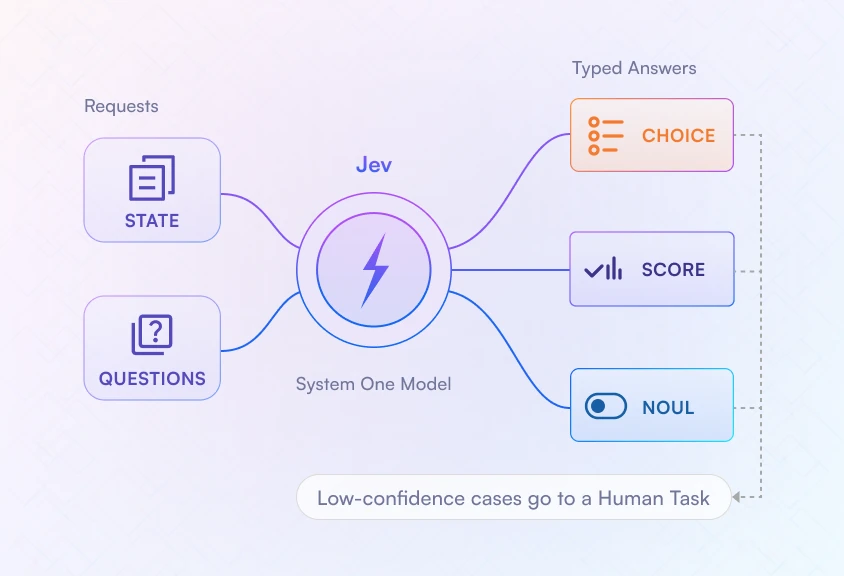
Your workflow still needs clear ownership, controlled access and human judgment at the right moments.
MagOneAI's organization-level model settings, role-based access and audit trails, the records of what happened, remain part of that foundation. Human Task nodes let a workflow pause for a person's input or approval. Teams can keep these controls central as they choose which model each agent uses.
The business process remains the starting point: what the agent should do, what information it may use, and who approves the outcome. A new model still needs testing, and prompts or settings may need adjustment. Cloud model access also needs its own data-handling review, separate from where MagOneAI is hosted.
My Advice to CTOs
Start with one workflow that has a clear problem: too much review time, rising costs, missed details or dependence on a single provider. Compare your current model with one relevant alternative using the same examples. Look at accuracy, time saved, total cost and how often a person has to step in.
Use the new option when the improvement is meaningful. Keep the current model when it already does the job well. And for a fixed calculation or business rule, a regular workflow step may be all you need.
More choice should make it easier to improve the work and adapt as needs change. That's the value we want these additions to bring.
Magure is a global enterprise AI company, UAE-headquartered, helping organizations move AI from pilot to production. Its flagship platform, MagOneAI, lets enterprises build, deploy, and govern AI agents on their own infrastructure with no-code development, sovereign deployment, and compliance built into the runtime. 80+ enterprise clients across industries. Magure is ISO 9001, 27001 & 42001 certified. SOC 2 Type II & GDPR complaint & Dubai AI Seal holder.
Found this useful? Share it with your team.

CTO, Magure
FAQ
Frequently Asked Questions
- What models has MagOneAI added support for?
- MagOneAI now supports Amazon Bedrock, Google Vertex AI and Grok (xAI), alongside its existing support for OpenAI, Anthropic, Gemini and self-hosted models.
- Do I need to rebuild my existing workflows to use a new model?
- No. You can switch or test a different model within your existing workflow. Prompts or settings may need adjustment, but the workflow structure stays the same.
- Does switching AI models affect workflow governance or audit trails in MagOneAI?
- No. MagOneAI's organisation-level model settings, role-based access controls and audit trails apply to every workflow regardless of which model is in use. Human Task nodes and approval checkpoints remain exactly as configured. Governance is at the platform layer, not the model layer.
- How should enterprises choose the right AI model for a workflow?
- Start with a specific business problem, then compare the current model with a relevant alternative using the same real-world examples. Evaluate accuracy, time saved, total cost, and the frequency of human intervention. Select the alternative only when testing demonstrates a meaningful improvement.
- What is Amazon Bedrock and how does it work with MagOneAI?
- Amazon Bedrock is a fully managed AWS service that gives teams access to foundation models through their existing cloud setup. In MagOneAI, it works as a model provider route, so if your organisation already has an approved AWS relationship, you can bring Bedrock models into your agentic workflows without a separate procurement process.