On 21 April 2026, DIFC (Dubai International Financial Centre), a leading global financial free zone in Dubai, UAE announced that it will become the world's first AI-native financial centre, embedding AI at the foundational level of its legal frameworks, business operations, and ecosystem infrastructure. Regulation 10 is the regulatory backbone of that transformation. The DIFC's AI-native programme is expected to generate USD 3.5 billion in economic value and create 25,000 jobs.
This raises a question - How is personal data being handled by autonomous and semi-autonomous systems? To answer that, DIFC Regulation came in as an amendment to the DIFC Data Protection Regulations under Data Protection Law No. 5 of 2020, and it tackles the bit most data protection laws still haven't figured out: what happens when autonomous and semi-autonomous systems are the ones processing personal data.
If you're registered in the DIFC and your AI system processes personal data, you're covered, regardless of where the system was built or where the vendor is headquartered. If personal data within the DIFC is involved, Regulation 10 applies.
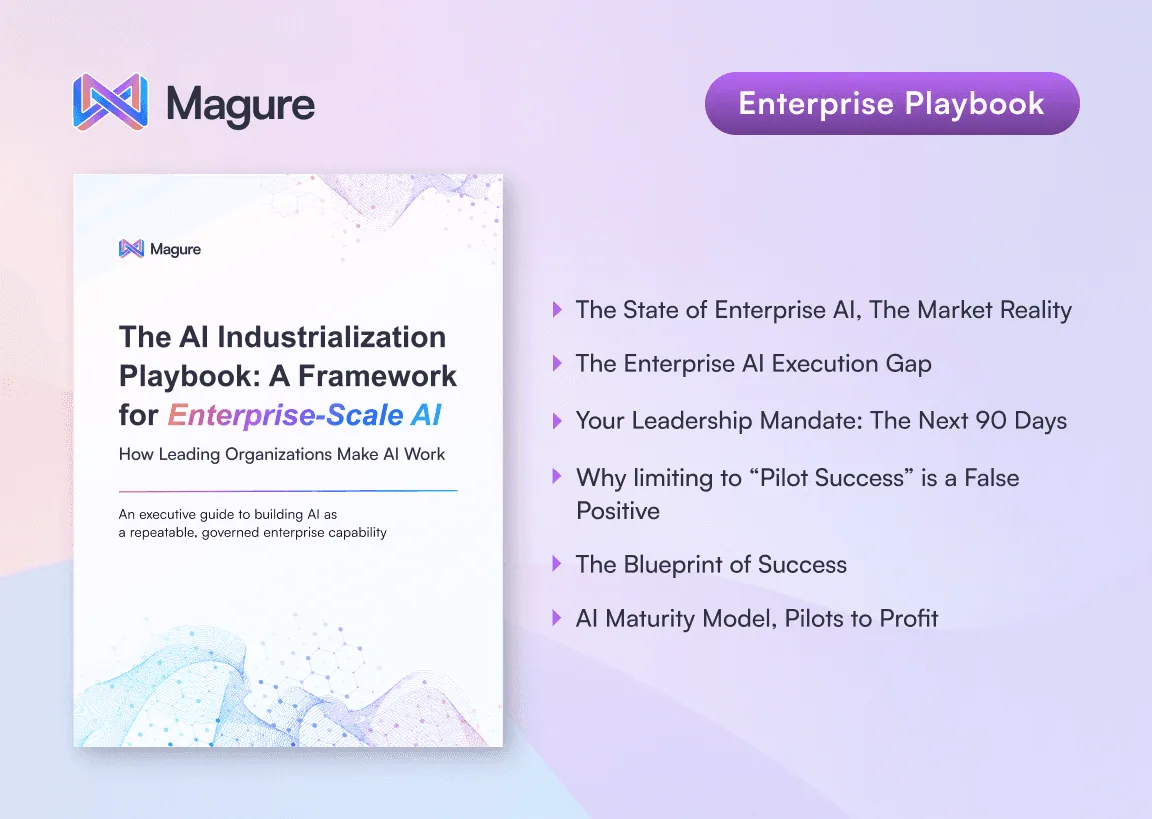
This guide walks through every obligation under DIFC Regulation 10, where penalty exposure compounds across UAE jurisdictions, and what compliant architecture looks like once it's running in production. We've also mapped the full penalty landscape, framework overlaps, and a 90-day compliance roadmap in our free report - Comply or Pay: The Definitive UAE AI Governance & Compliance Mapping Report, If you're running AI in the DIFC, this is what your compliance and legal teams need on their desk.
What Is DIFC Regulation 10?
Regulation 10 is a part of DIFC Data Protection Regulations, that deals with autonomous and semi-autonomous systems handle personal data inside the DIFC. The regulation uses the term “System” rather than “AI.” A System is any machine-based system operating autonomously or semi-autonomously that can process personal data, whether for purposes humans defined, purposes the system itself defined, or both. In practice, this captures predictive analytics, machine learning models, generative AI, and any automated decision-making that touches personal data.
Regulation 10 also rethinks accountability. Rather than hinging on the ambiguous concept of “control” over data, it assigns responsibility based on who authorizes or benefits from the System and its output. Two roles matter here: Deployers (the entities putting the System into use) and Operators (the entities providing or maintaining it). Both carry distinct obligations.
What makes Regulation 10 significant is its approach. Rather than creating a standalone AI act like the EU, the DIFC chose to integrate AI governance within its existing data protection framework. The result is a regulation that treats AI not as an abstract technology question but as a data processing reality with concrete obligations, accountability structures, and financial consequences.
The Six Core Obligations Under DIFC Regulation 10
Every AI system operating in the DIFC must satisfy six design and operational requirements. The Commissioner will assess compliance against these during inspections and enforcement actions.
1. Ethical AI Principles
Regulation 10 mandates your algorithms to be free from bias. It means, bias testing, training data audits, and documented fairness assessments, have to be documented and inspected.
2. Human-in-the-Loop Oversight
If an AI decision involving personal data could lead to unfair or discriminatory outcomes, it must get routed to a human for review before anything goes through.
3. Privacy by Design
Data minimisation, pseudonymisation, access controls, encryption, bias testing - none of these can be an afterthought; they must be baked into the system architecture before it goes anywhere near personal data. This is one of those areas where most teams think they're covered because they've added encryption, but the regulation goes much further than that.
4. AI Register
Think of this as a ROPA, but for AI. Entities need to maintain a dedicated DIFC AI register that documents every AI system in use - what it does, what categories of personal data it processes, and what technical and organizational safeguards are in place. If it's active and involves personal data, it needs to be in the AI register.
5. Autonomous Systems Officer (ASO)
If your entity uses AI for high-risk processing involving personal data for commercial purposes, you need to appoint an Autonomous Systems Officer. The ASO must have the competencies, status, role, and authority the Commissioner specifies.
6. Cybersecurity Measures
AI systems must meet cybersecurity standards that include secrets management through dedicated vaults (not hardcoded in config files), enterprise SSO with MFA, breach notification with sub-72-hour response, and crash recovery procedures. Many AI deployments fail here because they were originally built as prototypes and never hardened for production. The Commissioner won’t distinguish between a prototype and a production system, if it processes personal data, it needs to meet these standards.
Who Needs an Autonomous Systems Officer?
Any DIFC-registered entity using AI for high-risk processing involving personal data for commercial purposes. High-risk processing includes automated profiling that produces legal effects, credit scoring, biometric identification, and any processing likely to create a high risk to data subjects’ rights and freedoms.
The ASO role is distinct from the Data Protection Officer (DPO), though in smaller organizations the roles may overlap. The Commissioner has published guidance on the required competencies. If your organization is large enough to have separate AI and data protection functions, these should be separate appointments.
What Happens If You Don’t Comply with DIFC Regulation 10?
The Commissioner of Data Protection has enforcement powers under the DIFC DPL. After the July 2025 amendments, fines range between USD 25,000 and USD 50,000 per violation, depending on how serious the breach is. For repeated or flagrant offences, the Commissioner can push beyond that, and right now, there's no cap to that.
But fines are only a part of the picture. Something most people miss is that the onshore criminal law applies within the DIFC, which means, a privacy breach that goes far enough becomes a criminal case, with Dubai Police involved.
And then there's the jurisdictional overlap, which is where things get properly complicated. If your AI system is registered in the DIFC, it also processes mainland data (Federal PDPL) and serves ADGM clients (ADGM Data Protection Regulations 2021). That's three frameworks, three penalty regimes, all triggered by the same system. We've broken down exactly how that compounding works in our analysis of UAE AI compliance penalties.
What Compliance-Ready Architecture Looks Like
Meeting these obligations at the architecture level where it counts is what separates a compliant enterprise from one that’s exposed. Policy documents won’t protect you during an inspection. A compliance-ready AI platform needs to provide role-based access control, vault-backed secrets management, audit logging of every AI action, human oversight gates for consequential workflows, an AI register that updates automatically as systems change, and LLM governance controls that enforce model restrictions. These aren’t nice-to-haves; they map directly to the six obligations.
This is the design philosophy behind MagOneAI. As a DIFC-registered, triple-ISO certified platform (ISO 9001 | ISO 27001 | ISO 42001), Magure offers sovereign deployment options self-hosted, on-premise, or air-gapped, so that data, models, and audit trails stay under your direct control. Your deployment model is itself a compliance decision, and for enterprises evaluating their options, our guide on DPIA AI UAE requirements walks through the trade-offs.
What Enterprises Should Do Now
If you’re a DIFC-registered entity deploying AI systems, here’s a practical 90-day plan to get from gap analysis to full compliance.
Days 1- 21: Run your gap assessment. Identify every AI system that processes personal data. Map each against the six obligations above. Use the 24-item self-assessment checklist to structure the process.
Days 22-45: Evaluate and select a compliant platform. Compare AI platforms against the compliance mapping tables in our UAE AI Governance report. Prioritize self-hosted or air-gapped deployment for data sovereignty. Validate human oversight mechanisms and ISO certifications. Run a Proof of Concept on your highest-priority use case.
Days 46-70: Implement governance. Deploy with enterprise SSO, RBAC, and secrets management configured. Set up human oversight gates. Establish your AI Register. Complete DPIAs. Make the ASO or DPO appointment.
Days 71-90: Go live with compliance controls active. Launch production workflows with full monitoring. Schedule quarterly audits using platform execution logs. Build your compliance evidence package for regulatory examinations.
Found this useful? Share it with your team.

Senior Content Writer
FAQ
Frequently Asked Questions
- What is Regulation 10?
- It governs how AI and autonomous systems process personal data inside the DIFC. The scope is broad - any machine-based system that can make decisions autonomously or semi-autonomously falls under it, from ML models to generative AI tools.
- Do I need an ASO, and is it the same as a DPO?
- You need an ASO if your entity uses AI for high-risk commercial processing of personal data. The ASO is a separate role from the DPO, though smaller organizations may assign both functions to one person. The Commissioner has published specific competency requirements for the ASO role.
- Is DIFC Regulation 10 enforcement actually happening?
- Yes. The Commissioner conducts inspections reaching at least 100 entities per year through an automated process via the DIFC Client Portal. The July 2025 amendments also introduced a private right of action, meaning data subjects can now take claims directly to the DIFC Courts. Enforcement has teeth.
- What are the six obligations under DIFC Regulation 10?
- Ethical AI principles (unbiased algorithms), human-in-the-loop oversight, privacy by design, maintaining an AI register, appointing an ASO for high-risk processing, and meeting cybersecurity standards.
- How do DIFC penalties interact with federal UAE penalties?
- They can compound. A single AI system might fall under DIFC Regulation 10, the Federal PDPL, and ADGM regulations simultaneously. Each has its own penalty regime, so non-compliance in one jurisdiction doesn't shield you from enforcement in another. Our UAE AI Governance report includes a side-by-side penalty comparison across all frameworks.